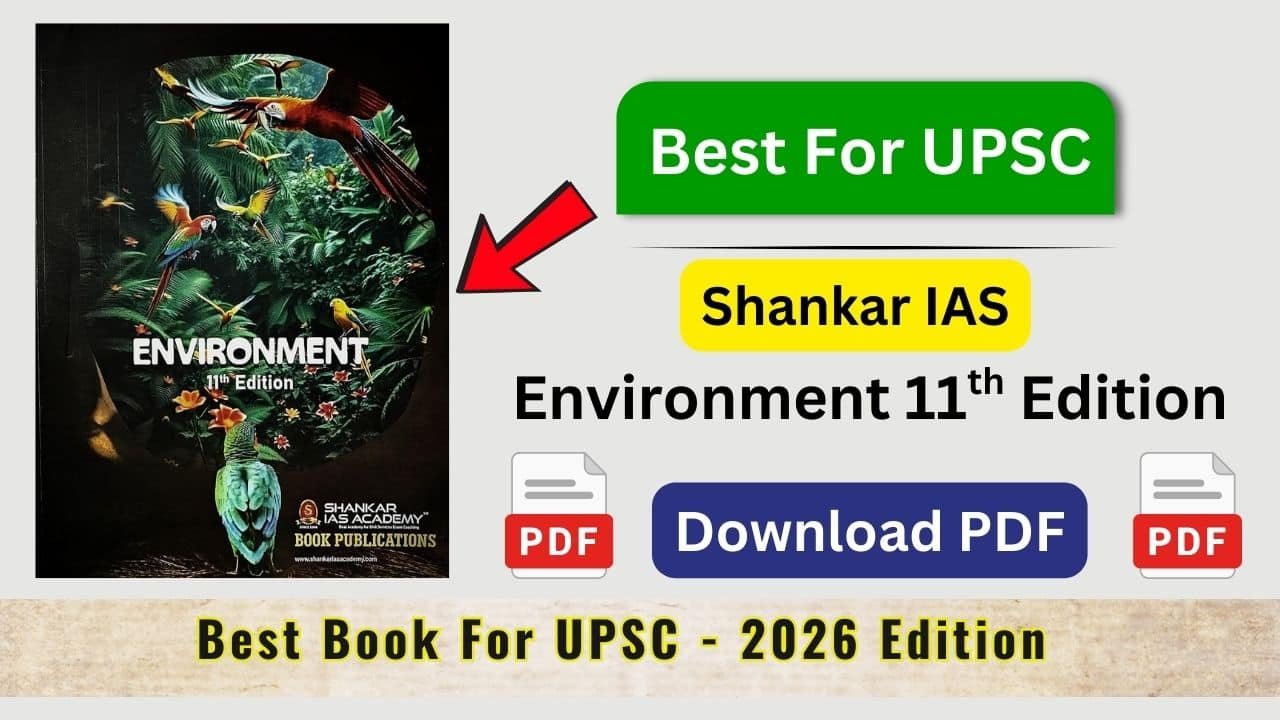
Shankar IAS Environment 11th Edition Book Pdf Download : In the ever-evolving landscape of the UPSC Civil Services Examination, one subject has consistently grown in weightage and complexity: Environment and Ecology. Whether you are a beginner starting your Prelims journey or a seasoned veteran preparing for Mains, there is one book that sits permanently on every topper’s desk—Shankar IAS Academy’s “Environment.”
With the release of the 11th Edition, the stakes have been raised. In this article, we explore why this book is indispensable, what’s new in the latest edition, and how you can leverage it to score maximum marks.
Why Environment is the “Make or Break” Subject for UPSC
Since the merger of the Indian Forest Service (IFoS) Prelims with the Civil Services Prelims, the number of questions from Environment and Ecology has skyrocketed. On average, you can expect 15 to 20 questions in Prelims.
Success in these questions often determines whether you clear the cutoff. Unlike History or Culture, Environment is a dynamic subject where static concepts meet current affairs. This is where the Shankar IAS Environment book bridges the gap.
Key Features of the Shankar IAS Environment 11th Edition
The 11th edition isn’t just a reprint; it’s an evolution. Here is what makes it the gold standard:
1. Comprehensive Coverage of Static Concepts
The book simplifies complex ecological terms. From the basics of Trophic Levels and Biomes to intricate details of Nitrogen and Phosphorus cycles, the language is lucid and beginner-friendly.
2. Updated Current Affairs
Environmental laws, international summits (like COP28), and new wildlife protection amendments are frequently updated. The 11th edition integrates recent data regarding:
- Ramsar Sites in India.
- Tiger Census reports.
- New National Parks and Wildlife Sanctuaries.
3. Structured for Quick Revision
The use of tables, bullet points, and bold text makes it perfect for last-minute revision. For a UPSC aspirant, time is currency, and this book is designed for high-speed scanning.
Decoding the Content: What’s Inside?
To rank high in your exams, you need to master the following sections highlighted in the book:
Ecology and Ecosystems
Understand the fundamental interactions between biotic and abiotic components. Focus on Ecotones, Ecological Niche, and Succession.
Biodiversity
This is the most “high-yield” section. The book covers:
- Red Data Book: IUCN classification of species (Critically Endangered, Endangered, etc.).
- Biodiversity Hotspots: Specifically those in India like the Western Ghats and Himalayas.
Climate Change
With global boiling being a reality, UPSC focuses heavily on Greenhouse Gases, Ocean Acidification, and Global Warming. Shankar IAS provides a detailed breakdown of the UNFCCC, Kyoto Protocol, and the Paris Agreement.
Environmental Legislation
India has a robust framework for environmental protection. You must study:
- Wildlife Protection Act, 1972 (and its recent amendments).
- Environment Protection Act, 1986.
- Biological Diversity Act, 2002.
How to Read Shankar IAS Environment for Maximum Retention
Many students make the mistake of reading the book cover-to-cover like a novel. To rank well in UPSC, follow this “3-Pass Strategy”:
- The First Pass (The Bird’s Eye View): Read through the chapters without trying to memorize. Just understand the concepts of ecology and pollution.
- The Second Pass (The Deep Dive): Highlight key terms and organizations (like UNEP, CITES, TRAFFIC). Start linking the static portions with news you read in The Hindu or Indian Express.
- The Third Pass (The Filter): Create short notes of only the data that is hard to remember—like specific chemicals in pollution or the locations of Biosphere Reserves.
Supplementing the Book: The “Static + Current” Formula
While the Shankar IAS 11th Edition is comprehensive, Environment is 50% current affairs. To ensure your WordPress readers (or yourself) are fully prepared, recommend these supplements:
- The Hindu/Indian Express: Look for “Sci-Tech” and “Environment” sections.
- PIB (Press Information Bureau): For government schemes like Namami Gange or National Clean Air Programme.
- Down To Earth Magazine: Great for in-depth analysis of environmental issues for Mains.
Common Myths About Shankar IAS Environment
Myth: “The book is too bulky and hard to finish.”
Fact: While it looks thick, nearly 30% of the book consists of appendices and lists that you don’t need to memorize word-for-word. Focus on the core chapters.
Myth: “Older editions are enough.”
Fact: Environmental data changes every year. New species are discovered, and new protocols are signed. Using the 11th Edition ensures you don’t lose marks due to outdated information.
SEO Tips for Your WordPress Article
If you are publishing this on a blog, keep these technical points in mind to rank on Google:
- Target Keywords: Use “Shankar IAS Environment 11th Edition,” “UPSC Environment Book,” and “Best Environment Book for UPSC” in your headings.
- Internal Linking: Link to other posts like “How to prepare for UPSC Geography” or “UPSC Prelims Strategy.”
- Alt Text: Don’t forget to add “Shankar IAS Environment Book Cover” as the Alt Text for the image you uploaded.
- Meta Description: “Looking for the best book for UPSC Environment? Read our comprehensive review of the Shankar IAS Environment 11th Edition and master Ecology today.”
Conclusion
The Shankar IAS Academy Environment (11th Edition) remains an unrivaled resource for Civil Services aspirants. It turns a vast, intimidating subject into a manageable and scoring one. By combining this book with a consistent habit of following current affairs, you can turn the Environment section from a challenge into your biggest strength.
Are you ready to level up your UPSC preparation? Grab your copy of the 11th edition and start your journey toward the LBSNAA today!